Let me ask you something. Have you ever walked into your basement in January and immediately wished you hadn’t? That bone-deep chill that hits you the moment you reach the bottom of the stairs is not just uncomfortable. It’s costing you money every single month, and most homeowners have no idea how much.
We’ve been insulating basements across Northern Colorado for years, and the number one thing we hear after a job is done is, “I wish I’d done this sooner.” Proper basement insulation is one of those upgrades that pays you back quietly and consistently, through lower energy bills, a more comfortable home, and fewer headaches down the road.
Why Your Basement Matters More Than You Think
Here’s something most people overlook: the basement is the foundation of your home’s thermal envelope. It sits directly against the ground, where temperatures stay cold and moisture is always present. Without adequate insulation, that cold bleeds upward through your floors, forces your HVAC system to work overtime, and creates the kind of damp conditions that invite mold.
The stack effect makes this worse. Warm air rises and escapes through the upper levels of your home, pulling cold air in from the bottom to replace it. An uninsulated basement is essentially a welcome mat for that cold air. Seal and insulate the basement properly, and you interrupt that cycle at the source.
What You Actually Gain from Basement Insulation
Warmer Floors and Living Spaces
Basement walls that run below grade stay cold regardless of the season, and the above-grade portions are exposed to outdoor temperatures all winter. Insulating those walls creates a buffer that keeps your floors noticeably warmer and makes the entire home feel more consistently comfortable.
Lower Monthly Energy Costs
One of the most common places heat escapes in a home is through uninsulated rim joists, the framing that sits at the top of your foundation wall. That’s often the first thing we address. Combined with wall insulation, sealing those areas reduces the load on your heating and cooling system. Less demand means lower utility bills, month after month.
Moisture Control That Protects Your Home
When warm indoor air hits cold, uninsulated concrete, condensation forms. Do that repeatedly over a season or two and you’ve got the conditions for mold growth and wood rot. Good insulation keeps basement surfaces warmer, reduces condensation, and protects the structural components of your home from moisture damage over time.
Noise Reduction
This one surprises a lot of people. Dense insulation materials significantly dampen sound transmission between the basement and the floors above. If you use your basement as a home office, gym, or entertainment space, the difference in ambient noise is noticeable right away.
Insulation Materials That Work Best in Basements
Not every insulation type is right for every application. Here’s how the main options break down for basement use.
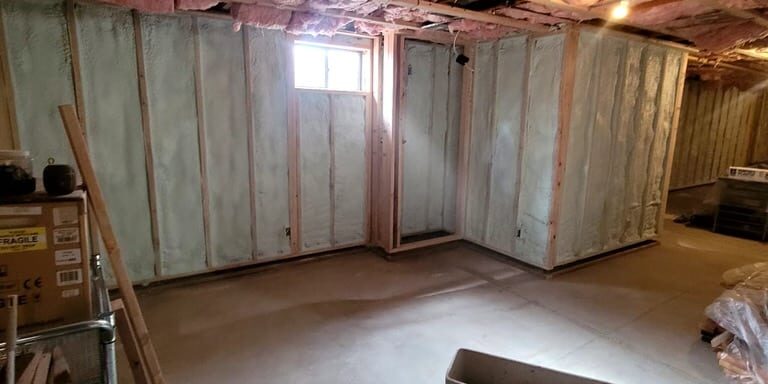
This is our go-to recommendation for rim joists and areas where air sealing is the priority. Spray foam expands to fill every gap and crack, creating an airtight barrier that also resists moisture. It performs exceptionally well in the tight, irregular spaces that are common in older Colorado homes.
Rigid foam panels offer high thermal resistance relative to their thickness, and they hold up well in damp environments. They work well on basement walls and are a reliable option when you want a clean, continuous thermal barrier without the expansion of spray foam.
Fiberglass batts are a cost-effective choice for finished basement walls and ceiling joists. They work best in dry conditions and are often combined with a vapor barrier to manage moisture. For unfinished spaces or areas with any history of dampness, we typically recommend pairing them with another solution.
How Often Should You Have Your Basement Insulation Checked?
Even if your basement has existing insulation, it’s worth having it inspected every five years or so. Insulation can settle, compress, or absorb moisture over time, reducing its effectiveness. Colorado’s climate swings are hard on homes, and older insulation materials may no longer meet current energy efficiency standards. A quick assessment costs you nothing and can reveal whether your current setup is still doing its job.
Frequently Asked Questions
Q: How do I know if my basement actually needs insulation?
A: A few signs to look for: your basement is noticeably cold in winter, your heating bills have been climbing, you notice moisture or musty odors, or your home was built before the 1990s and has never had insulation work done. Any of these is a good reason to schedule an assessment.
Q: What is the best type of insulation for a basement in Colorado?
A: It depends on the specific areas being insulated. Spray foam is ideal for rim joists and air sealing. Rigid foam board works well on foundation walls. Fiberglass batts are a solid choice for finished spaces. In many cases we recommend a combination approach to cover all the bases effectively.
Q: Will basement insulation really make a difference in my energy bills?
A: Yes, and often more than homeowners expect. Sealing and insulating the basement removes one of the biggest sources of heat loss in a home, reducing the runtime of your HVAC system. The exact savings depend on your home’s size and current insulation levels, but the improvement is typically noticeable within the first heating season.
Q: Can basement insulation help with moisture problems?
A: Insulation reduces condensation by keeping wall surfaces warmer, which lowers the risk of mold and moisture damage. That said, if you have active water intrusion or drainage issues, those need to be addressed before insulation goes in. We assess both during our free in-home evaluation.
Q: How long does basement insulation installation take?
A: Most residential basement insulation projects can be completed in a day or two, depending on the size of the space and the materials used. We work efficiently and do our best to minimize disruption to your daily routine.
Q: Is basement insulation a good investment if I’m planning to sell?
A: Absolutely. Energy-efficient homes consistently attract more buyer interest and often command better offers. An insulated, dry, comfortable basement is also a strong selling point on its own, particularly for buyers who are looking at the home as a long-term investment.
Let’s Make Your Basement Work for You
We started Insulation Pros of Colorado because we believe every homeowner in Northern Colorado deserves a home that’s comfortable, efficient, and built to last. Basement insulation is one of the most straightforward ways to get there, and we’ve seen firsthand what a difference it makes for families who’ve been putting up with cold floors and high bills for years.
Our estimates are always free, and we back every installation with a 10-year labor warranty. If you’re ready to stop letting your basement drain your comfort and your budget, give us a call or send us a message.
(970) 980-6455 | insulationprosco.com
Serving Loveland, Fort Collins, Greeley, Windsor, Boulder, Denver, and surrounding communities throughout Northern Colorado.