If you’ve ever gotten a quote for crawl space work and heard both “encapsulation” and “insulation” mentioned, you may have wondered whether these are the same thing or two completely different services. It’s a common point of confusion, and understanding the distinction can help you make a smarter decision for your home.
The short answer: encapsulation and insulation solve different problems. Knowing which one you need, or whether you need both, starts with understanding what each one actually does.
What Is Crawl Space Insulation?
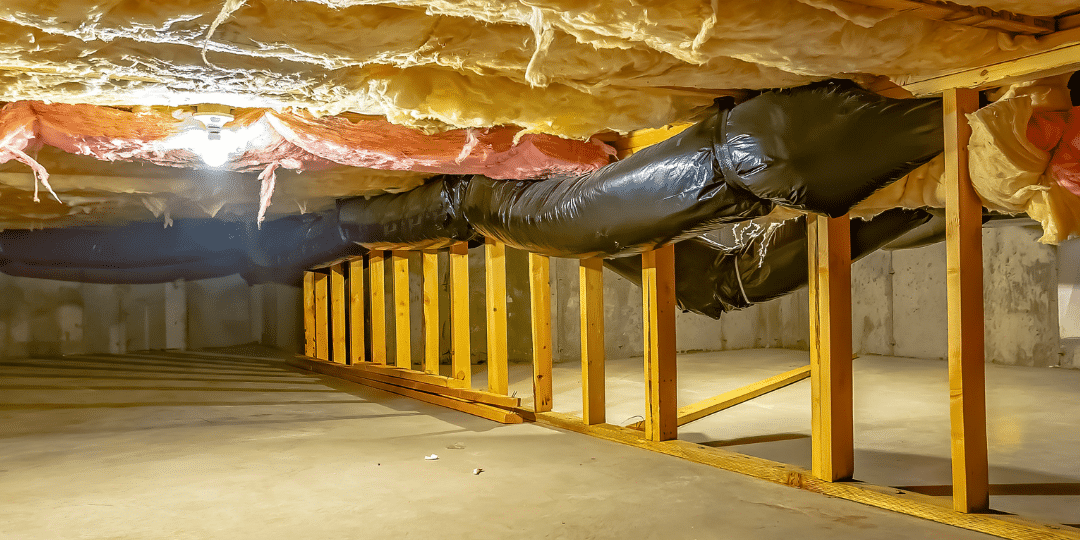
Crawl space insulation focuses on thermal performance. Its job is to slow the transfer of heat between your crawl space and the living areas above it. During winter, insulation keeps cold air from seeping up through your floors, which reduces drafts, helps prevent frozen pipes, and supports consistent temperatures throughout your home. Proper insulation also takes pressure off your HVAC system, delivering real energy savings on your monthly utility bills.
Common insulation materials used in crawl spaces include fiberglass batts installed between floor joists, rigid foam board applied against the crawl space walls, and spray foam for areas that need both thermal performance and an air seal. The right material depends on your crawl space layout and whether moisture is already a concern.
Crawl space insulation is a good fit when your primary concerns are cold floors in the winter, rising heating and cooling costs, or pipes that are vulnerable to freezing.
What Is Crawl Space Encapsulation?
Encapsulation is about moisture control. Rather than managing temperature, it focuses on sealing your crawl space off from the outside environment entirely. The process involves installing a heavy-duty water vapor barrier across the floor and crawl space walls, sealing vents and access points, and in many cases adding a crawl space dehumidifier to maintain healthy humidity levels year-round. In situations where bulk water or groundwater intrusion is present, a sump pump may also be installed as part of a complete moisture management system.
Ground moisture is one of the most damaging and underestimated threats to a home. Because up to 60% of the air circulating inside your home can originate from the crawl space, moisture problems below have a direct impact on your indoor air quality. Left unaddressed, excess water vapor leads to mold and mildew growth, wood rot, compromised structural integrity, and elevated allergen levels throughout the home. Over time, water damage to floor joists and structural framing can become a significant and expensive repair.
Encapsulation makes the most sense when you are dealing with standing water, a persistent musty smell, visible mold and mildew, high indoor humidity, air quality issues, or a crawl space that stays damp regardless of the season.
Key Differences at a Glance
Addresses heat transfer and energy efficiency. Keeps floors warm, reduces heating and cooling costs, prevents frozen pipes, and helps with energy savings. Works best in crawl spaces that are already dry. Common materials include fiberglass batts, rigid foam, and spray foam.
Addresses moisture intrusion and air quality issues. Installs a moisture barrier across the floor and crawl space walls to prevent mold and mildew, wood rot, and structural damage. Recommended when ground moisture or bulk water is present or a recurring problem. Often includes a crawl space dehumidifier and, where needed, a sump pump.
Do You Need Both?
In many cases, yes. If you insulate a crawl space that has a moisture problem without first addressing that moisture, you risk trapping water vapor inside the insulation itself. Over time this reduces the insulation’s effectiveness and can accelerate the exact mold, mildew, and water damage you were trying to avoid.
A comprehensive long-term solution typically involves encapsulating the crawl space first to control ground moisture and install a proper water vapor barrier, then adding insulation to improve thermal performance and energy savings. Some homeowners choose closed-cell spray foam, which serves both purposes at once by creating a tight air seal that also provides meaningful insulation value. For others, rigid foam board installed along the crawl space walls combined with a heavy-duty moisture barrier on the floor covers both concerns effectively.
Protecting your home’s structural integrity starts below the living space. A professional assessment is the best way to determine which services your crawl space actually needs, rather than guessing and potentially investing in the wrong solution.
Frequently Asked Questions
Q: How do I know if my crawl space has a moisture problem?
A: Common signs include a musty odor coming from the floors or vents, visible mold and mildew, condensation on pipes or surfaces, wood that feels soft or spongy, or high indoor humidity and air quality issues. If you notice any of these, moisture control and a proper water vapor barrier should be addressed before any insulation work begins.
Q: Can I just add insulation to fix cold floors?
A: If your crawl space is dry and free of ground moisture, adding rigid foam board or fiberglass insulation to the floor joists or crawl space walls can be very effective at warming floors and preventing frozen pipes. However, if moisture is a factor, insulation alone will not solve the problem and may contribute to mold and mildew or water damage over time.
Q: How long does crawl space encapsulation last?
A: A professionally installed encapsulation system using a quality moisture barrier can last 20 years or more. The water vapor barrier is designed to be durable, though periodic inspections are a good idea to catch any shifting, tearing, or new sources of bulk water intrusion.
Q: Is crawl space encapsulation worth the cost?
A: For homes with ground moisture issues, encapsulation is a proven long-term solution that pays off through improved air quality, energy savings, reduced risk of structural damage, and a healthier living environment. It also tends to be an attractive feature for home buyers.
Q: Do I need a crawl space dehumidifier after encapsulation?
A: In many Colorado homes, a crawl space dehumidifier is a recommended addition to keep humidity levels consistently below 55%. Even after a moisture barrier is installed, some residual water vapor can remain, and a dehumidifier ensures structural protection and clean air quality are maintained throughout the year.
Q: When is a sump pump necessary?
A: If your crawl space experiences bulk water intrusion from rain, snowmelt, or a high water table, a sump pump may be needed as part of the encapsulation system. It works alongside the moisture barrier to actively remove water before it can cause structural damage or create conditions for mold and mildew growth.
Ready to Protect Your Crawl Space?
Whether your home needs insulation, encapsulation, or a combination of both, getting the right long-term solution installed correctly makes all the difference. At Insulation Pros of Colorado, our team has the experience to assess your crawl space, identify ground moisture issues and air quality concerns, and recommend a targeted approach using top-quality materials including rigid foam board, heavy-duty water vapor barriers, and crawl space dehumidifiers.
We offer free, no-obligation in-home assessments and back all of our installations with a 10-year labor warranty. Call us at (970) 980-6455 or visit insulationprosco.com to schedule your assessment and take the first step toward a drier, healthier, and more energy-efficient home.