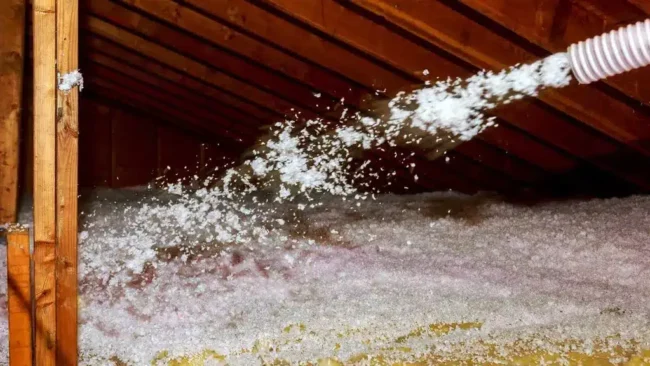
Choosing the right type of attic insulation is essential. This type of insulation is blown in – instead of the use of sheets of foam, the material is simply blown into place. Take a look at a few of the common pros and cons associated with blown in insulation. The Pros Blown in attic insulation has some benefits. It can efficiently fill in the gaps in the attic spaces. It only takes a short amount of time to complete. When blown in, the material…
As you consider the investment of adding insulation to your home, it’s often necessary to consider what blown-in insulation can offer. This type of insulation is sprayed into the various areas of the home or attic to create a blanket of protection. It does not come in pre-formed rolls but rather is sprayed (or blown) into place. This type of insulation is less likely to settle. What You Should Know One of the best things about blown-in insulation is that it can be very good at insulating areas reducing…
Blown-in insulation offers numerous advantages for homeowners looking to enhance their property's energy efficiency. This insulation type effectively fills gaps and voids in attics and walls, providing a seamless thermal barrier that can significantly reduce energy costs.
Additionally, blown-in insulation is lightweight and easy to install, making it a popular choice for retrofitting older homes. It can also improve indoor air quality by minimizing drafts and preventing moisture buildup, which can lead to mold growth.
Installation Process of Blown-In Insulation
The installation of blown-in insulation involves a specialized machine that aerates the insulation material and blows it into place. This process ensures that the insulation fills every nook and cranny, providing optimal coverage and effectiveness.
Homeowners can expect the installation to be completed in a few hours, depending on the size of the area being insulated. Professionals typically assess the space beforehand to determine the appropriate amount of insulation needed for maximum efficiency.
Comparing Blown-In Insulation to Other Types
When considering insulation options, it's essential to compare blown-in insulation with other types, such as batt or spray foam insulation. Blown-in insulation excels in hard-to-reach areas and can be more cost-effective in certain applications.
In contrast, batt insulation may require more labor for installation, while spray foam offers superior air sealing but at a higher cost. Understanding the benefits and limitations of each type can help homeowners make informed decisions based on their specific needs.
Common Misconceptions About Blown-In Insulation
There are several misconceptions surrounding blown-in insulation that can lead to confusion among homeowners. One common myth is that blown-in insulation is only suitable for attics, whereas it can effectively insulate walls, floors, and crawl spaces as well.
Another misconception is that blown-in insulation is prone to settling over time, which can reduce its effectiveness. However, modern materials are designed to resist settling, maintaining their insulating properties for many years when installed correctly.
Blown-in insulation offers numerous advantages for homeowners looking to enhance their property's energy efficiency. This insulation type effectively fills gaps and voids in attics and walls, providing a seamless thermal barrier that can significantly reduce energy costs.
Additionally, blown-in insulation is lightweight and easy to install, making it a popular choice for retrofitting older homes. It can also improve indoor air quality by minimizing drafts and preventing moisture buildup, which can lead to mold growth.
Installation Process of Blown-In Insulation
The installation of blown-in insulation involves a specialized machine that aerates the insulation material and blows it into place. This process ensures that the insulation fills every nook and cranny, providing optimal coverage and effectiveness.
Homeowners can expect the installation to be completed in a few hours, depending on the size of the area being insulated. Professionals typically assess the space beforehand to determine the appropriate amount of insulation needed for maximum efficiency.
Comparing Blown-In Insulation to Other Types
When considering insulation options, it's essential to compare blown-in insulation with other types, such as batt or spray foam insulation. Blown-in insulation excels in hard-to-reach areas and can be more cost-effective in certain applications.
In contrast, batt insulation may require more labor for installation, while spray foam offers superior air sealing but at a higher cost. Understanding the benefits and limitations of each type can help homeowners make informed decisions based on their specific needs.
Common Misconceptions About Blown-In Insulation
There are several misconceptions surrounding blown-in insulation that can lead to confusion among homeowners. One common myth is that blown-in insulation is only suitable for attics, whereas it can effectively insulate walls, floors, and crawl spaces as well.
Another misconception is that blown-in insulation is prone to settling over time, which can reduce its effectiveness. However, modern materials are designed to resist settling, maintaining their insulating properties for many years when installed correctly.